

Ofelia de Pablo and Javier Zurita
Ofelia de Pablo and Javier Zurita are documentary makers, visual artists, and co-founders of Hakawatifilm, an independent multimedia production company specializing in new narratives with social impact.
Their work combines photography, documentary film, and participatory education to transform perspectives on human rights, migration, gender equality, and the environment. They have developed projects in more than 70 countries and have been published in media outlets such as The Guardian, The New York Times, National Geographic, and El País Semanal. Their work has been recognized at the UK’s Wildscreen Festival and nominated for the Amnesty Media Awards.
Curated by: Hakawatifilm
Exhibition design: Hakawatifilm
Migration is a complex phenomenon that has shaped societies throughout history and is often accompanied by negative narratives that obscure the voices and lives of those who experience it.
It is in this context that the project “Goals for Hope” emerges, presenting the stories of young migrants through photographs, audiovisual pieces, and texts created by themselves in a collaborative process that reflects their reality from their own perspective.
This project provides artistic and audiovisual tools to young people who have gone through migration processes so they can express their challenges, achievements, and fears. “Goals for Hope” will travel across Spain with the aim of changing the negative narrative imposed on migrants, creating a platform in which they themselves tell us their stories.
On this occasion, members of FC Darna, Más que Campeonas, Las Dragonas Lavapiés, and the CEAR Canarias team are, through art and sport, seeking to create a new visual narrative that promotes the fight against racism, by fostering a valuable experience of self-representation.
Through art, they become narrators of their own stories, generating empowerment and a self-guided social debate that drives dialogue on representation and integration. This exhibition is part of a journey that will continue across the territory, bringing together voices that will help build a new map of the visual narrative of migration created by its own protagonists. “Goals for Hope” becomes an educational and participatory tool for social change that invites reflection on what it means to be a migrant in today’s world and on how art and sport can be a powerful vehicle for social transformation.
Ofelia de Pablo and Javier Zurita.
More information: www.goalsforhope.org
“A ball to stop feeling alone.”
Brian Quevedo, coach of CEAR Canarias
Who is CEAR CF Canarias?
CEAR CF was born in Alicante in 2019 as a project of the Comisión Española de Ayuda al Refugiado (CEAR) to offer migrants and refugees something more than basic assistance: a space to feel part of something. A football team designed for those who arrive fleeing extreme situations and find, in sport, an opportunity to integrate, connect with others, and rebuild emotional bonds.
The project was born in Alicante, but it soon grew and today is also present in Madrid, Valencia, Gran Canaria, and Málaga.
In Gran Canaria, every year, dozens of refugees of different nationalities come together around a ball, a synthetic turf field, and, above all, a team. Because beyond the physical wellbeing that sport brings, there is a shared wound among those who have had to leave their homes behind: loneliness. Loneliness in the face of administrative, cultural, or linguistic barriers; loneliness in success and in failure; loneliness when no one understands your language.
In this context, football becomes an almost universal language. This is how Brian Quevedo, the team’s coach this season, sees it — he joined the project as a volunteer when CEAR CF was left without a coach: “That’s the thing about football: it’s a wonderful platform for adapting to a new society.” For many of the players, CEAR is not just a team: it’s the place where they feel visible, supported, and part of a community again.
“We are all people walking under the same sun.”
MAMADOU SISSOKO. Mali. 2006.
CEAR CF (Canary Islands)
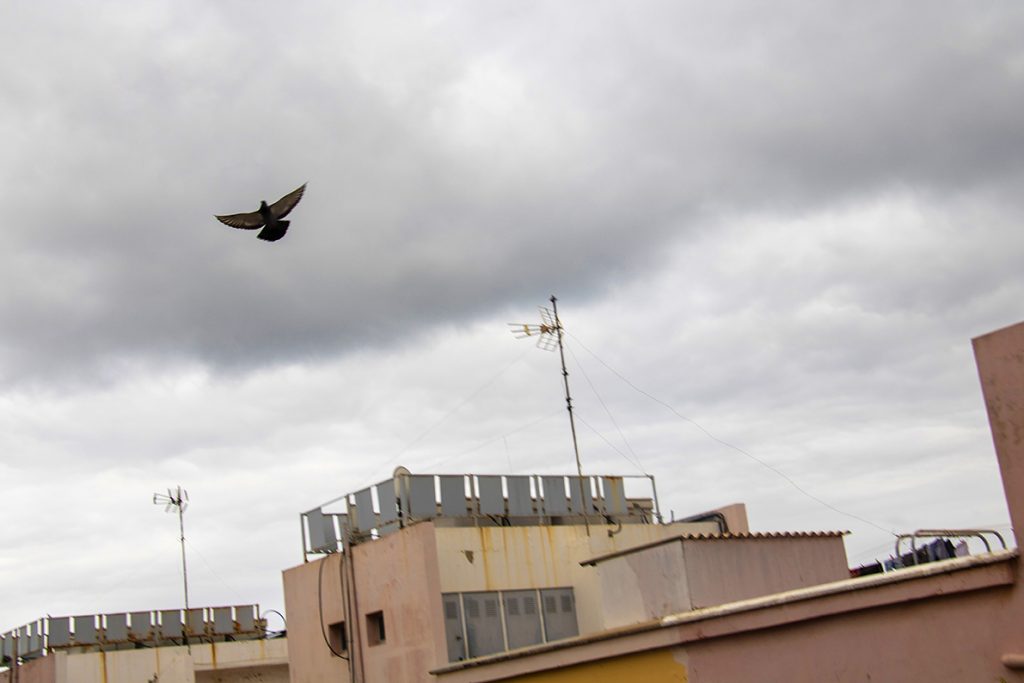
Mamadou is the eldest of seven siblings and grew up in a country at war. His father wouldn’t let him play football for fear he would be kidnapped and turned into a child soldier. At 16, he decided to cross the sea to pursue his dream. Four days of travel in which “you become a man” in order to overcome fear and hunger.
Today he is captain of the refugee team and learned Spanish in record time so he could study electrical engineering. He dreams of working hard to buy his mother a house and see her smile again. He photographs birds because he misses his animals and his horse.
And although he keeps the memory of his grandmother “here, in his heart,” his football teammates are his family.
“In my country, you can’t dream.”
SOULEYMANE CISSAKHO. Mali. 2006.
CEAR CF (Canary Islands)
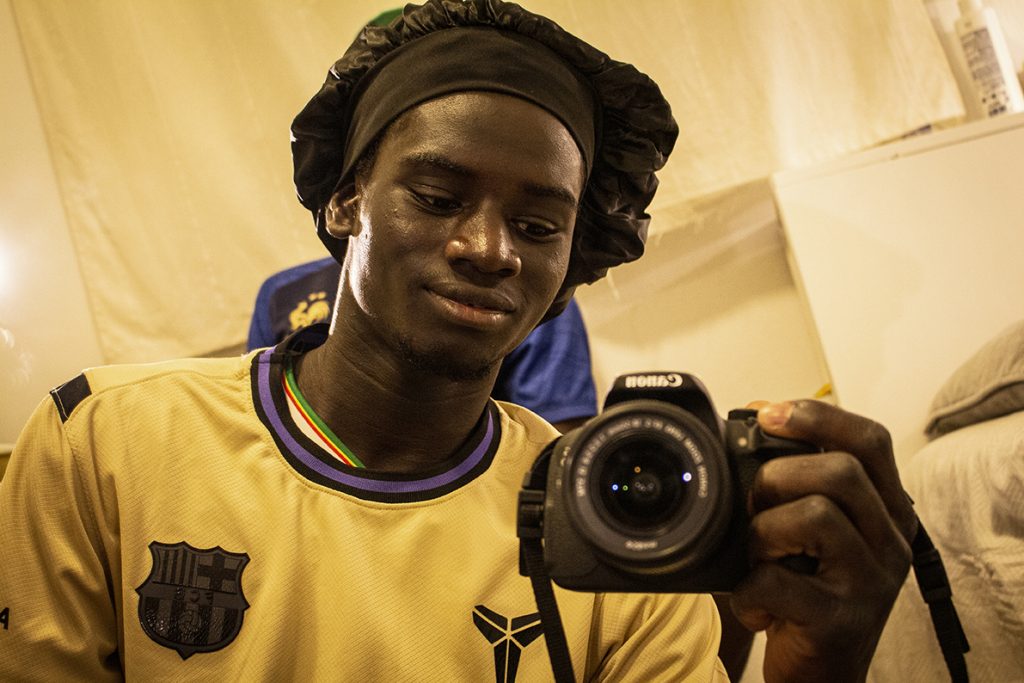
Since he was a child, Souleymane has always looked toward the future. He couldn’t imagine a life confined to a single place. Although he grew up in Mauritania, far from the war in his native Mali, the desire to “see the world” pushed him to make a brave and silent decision.
At just sixteen years old, he set out to sea on a small boat with 47 other people, keeping the journey a secret so his mother wouldn’t live in fear. After four days of uncertainty on the waves, he arrived in the Canary Islands with the maturity of someone who already knew what it meant to work hard at his uncle’s mechanic workshop.
Today, at eighteen, Souleymane has traded car parts for carpentry wood, and he studies with a clear horizon in mind: working so he can once again embrace his mother and his two younger sisters, ages six and eight, whom he hasn’t seen in over two years. For him, the football field is the place where the silence of distance fills with friendly voices: “here I stopped being a stranger and became part of a family that celebrates together.”
Souleymane learned to cook with his mother, and now his favorite dish, mafé, is the one he cooks for his flatmates; sharing food is also a way of saying “I’m home.”
“They migrated to Barcelona and set up a football team to hold on to life.”
Sergi Llamas, coach of FC Darna
Who is FC Darna?
Darna was born in the Raval neighborhood of Barcelona, as an association helping young migrants without family support who arrive hoping to build a future.
The young men in the association asked Ángela Pérez-Chuecos (the president) to create a football team.
It started as a simple tournament. Ángela listened to the boys’ requests and took the plunge: in August 2019 she founded FC Darna, an 11-a-side football team with no money, little prospect of a future, but full of enthusiasm. Today they are officially registered and, despite limited resources, passion runs through the field.
They fight to make their dream come true — “to be league champions” — while learning, through football, to rebuild their lives. For them, this club has become “their second home.”
“Darna means home in Arabic. Darna is welcome, it is shelter, it is home… It is a place of personal and collective empowerment, where each person starts their life in Barcelona and begins searching for the most basic things to survive: food, work, housing, family, friends, and a football team. My father always says that family isn’t the one you inherit, but the one you build yourself. Darna is, above all, that: a family. A home where a family lives, one that grows year after year and, even as its members change, remains alive with the same identity and purpose as the first training session.”
“Football and drawing are my two loves; I’ve carried them together in my head and heart since I was a child.”
ZAKARIA EZZOUYN. Morocco. 2001.
FC Darna (Barcelona)
Zakaria arrives on the field with his good-natured smile, which transforms into an energetic character during matches. He studies graphic design and is clear that he wants to become a great artist, although he still can’t work due to lack of papers.
“Zaka” works as hard as he can to develop a style of his own that blends his origins with his new life here: “with my art, I want to make special things!” He is the creator of the Darna flag that flies from the stands every weekend. In the summer, he combines drawing classes he teaches to children with cutting hair at Youssef’s barbershop.
His face turns sad when he talks about his mother: “I’m an only child, and my father died when I was young. The distance is huge, that’s the worst part.”
“You’re there fighting, and the people behind you, who don’t know you, judge you unfairly, want you to stay quiet, to leave, to disappear. Sometimes you notice that racism, but you can’t let it affect you, you have to be prepared.”
“We face situations that aren’t easy, we have to help each other, and Darna is always there, it’s a door toward hope.
“Football changes people’s lives, makes them better.”
Dolores Galindo, president of Las Dragonas de Lavapiés
Who are the Madres Dragonas de Lavapiés?
The mothers of Dragones de Lavapiés, the Madres Dragonas, play three times a week on the makeshift lot on Calle de Embajadores, beneath the beautiful mural that reads “Libres totalmente, socialmente iguales” (“Completely free, socially equal”), where they share the space with their children every day. “Now it’s them who cheer us on at matches,” the mothers say. Las Dragonas de Lavapiés took part in 2019 in the “Diversity House” event, organized in Paris by FARE (Football Against Racism in Europe) on the occasion of the Women’s Football World Cup, and were part of the international “Inspire” gathering, organized by FARE in Warsaw, on the integration of refugee women through football. That same year they created the “Mujeres cambiando las reglas del juego” (“Women changing the rules of the game”) event together with the Red de ONGD Madrid, to celebrate female empowerment through football.
“Here they respect me just as I am.”
HAJAR TABIT. Morocco. 2005.
Madres Dragonas de Lavapiés (Madrid)
Hajar arrived two years ago to reunite with her father. In Morocco she studied Economics and now she’s working hard to master Spanish so she can get into university and specialize in finance. She came to build “a real future.”
She likes walking around the city, visiting museums, and photographing details, flowers, and sunlight. At Dragonas she has found a space where she feels supported and free.
“I didn’t think there was racism in Spain.” She sometimes feels people’s stares because she wears a headscarf, especially from older people. But on the team, she knows she doesn’t have to change to be accepted.
“Football has saved me; the magic happens at the ‘campito.'”
TANIA APARECIDA. São Paulo, Brazil.
Madres Dragonas de Lavapiés Team (Madrid)
For Tania, what was supposed to be a one-year trip turned into her whole life, and today this country is her home.
Her path hasn’t been easy: she is a survivor of gender-based violence, raises her son alone, and carries the weight of two jobs. Football has become her lifeline, “a space where everything bad disappears.”
The Dragonas have been the support network that has reminded her that even when you fall, you can always get back up. Her greatest joy is watching her son grow, while she keeps proving that there’s always a way through.
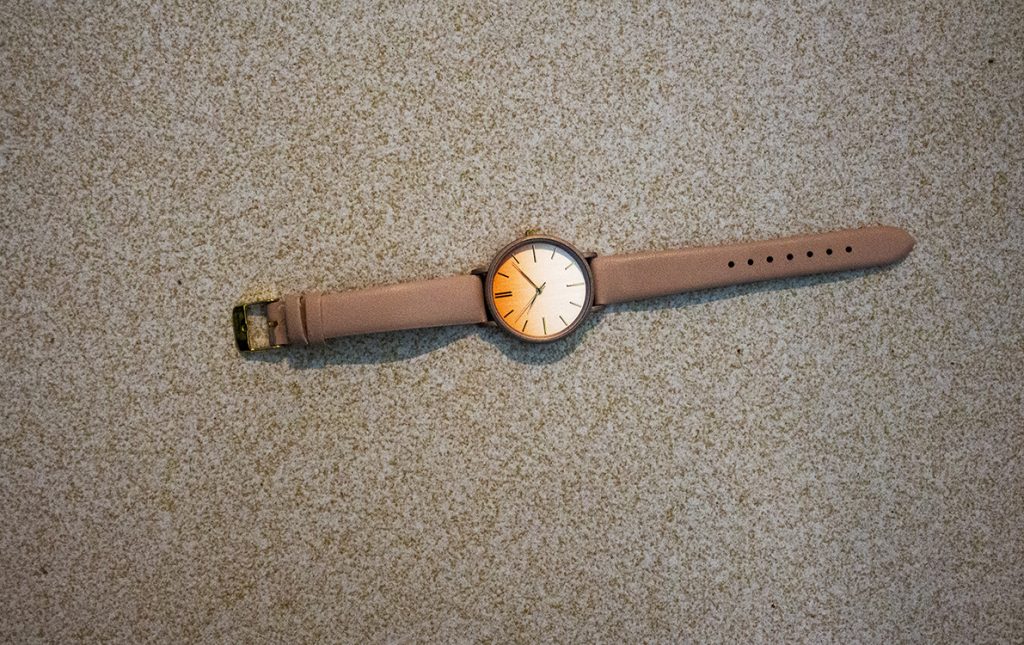
“Many girls arrived on the team feeling different. In football they found a place to feel free again.”
Who is Más que Campeonas?
Más que Campeonas was born in Seville as a project driven by the Fundación Fútbol Más to ensure that girls and teenagers — many of them migrants or in vulnerable circumstances — can access play, sport, and safe spaces to grow up supported.
The team brings together girls from different countries and cultures who have experienced change, family separation, and new beginnings. Some arrived fleeing war; others left behind their towns, their friendships, or part of their family to start a new life in Spain. On the field they found more than football: friends, trust, and a place to feel part of the group.
Más que Campeonas training sessions use play and sport as tools to build self-esteem, togetherness, and teamwork. Here it’s not just about competing, but about learning to listen to one another, look after each other, and trust one another.
“When we play, we’re together, happy, and calm,” the girls say. For many, the team has become a small refuge within a new city. Más que Campeonas wants no girl to be left out of the game because of her origin, her economic situation, or her social context. On the field, where you come from matters less than how you support the teammate beside you.
“On the football field, it doesn’t matter where you come from. There’s room for all of us here.”
ALEXANDRA. Nicaragua. 12 years old.
Más que Campeonas. Fútbol Más. (Seville)
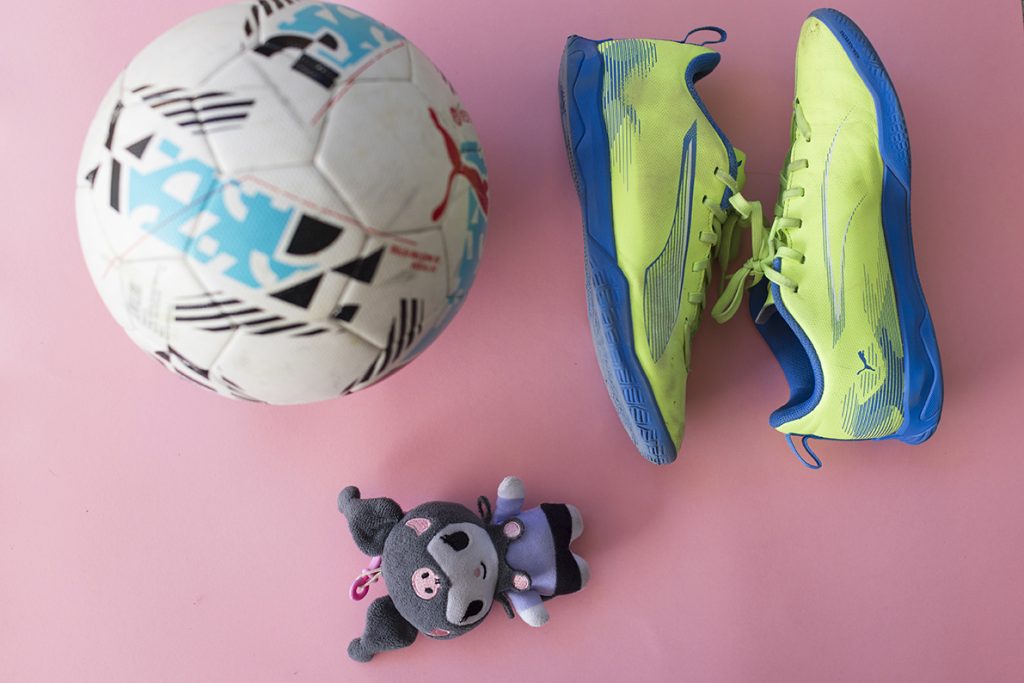
Alexandra arrived in Seville three years ago from Nicaragua. There, she lived surrounded by earth, trees, and nature. She remembers the freedom of playing in the street, climbing, running outdoors, and feeling part of the land, but also the violence: in her surroundings there were machetes in the streets and situations that led her family to seek out a safer place.
Emigrating meant leaving behind that nature and that sense of freedom, but also finding an opportunity to study and grow without fear. In Seville she has greatly improved in her studies, although sometimes she feels the city cages her in.
She misses the calm of her homeland, the animals, and the coffee plantations, but in football she has found another field where she can feel free again. With her camera she photographs the moon, her friends, games, and the small moments that remind her she can keep being herself: “I promised myself I’d never change. I want to keep being that cheerful, happy girl.”